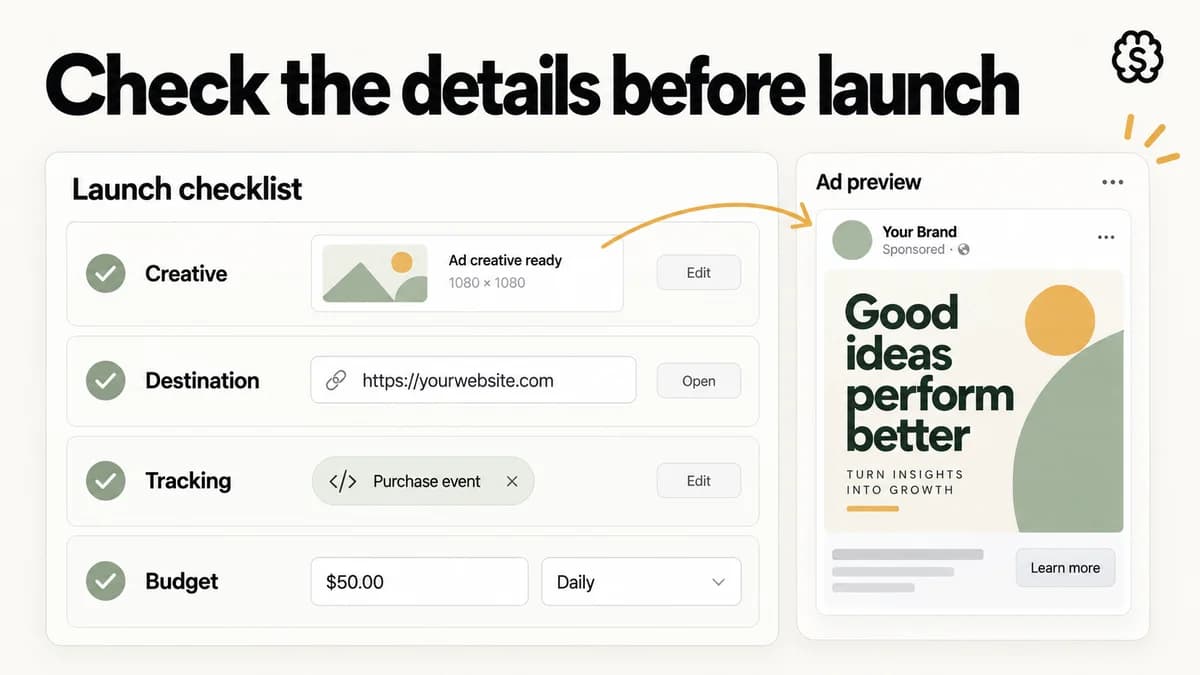
Name the exact batch and its owner
A launch starts with an approved set of assets, copy, destinations, and settings. Give the batch a stable identifier and name the person responsible for its final review. Keep approval attached to the actual versions being published. A message approving the idea does not necessarily approve the final execution.
List each creative with its concept and variation identifiers. Include primary text, headline, product or offer, destination, and the intended account. For video, include the complete final export. This inventory makes it possible to notice a missing asset, an old headline, or a duplicated variation before launch.
Separate production status from launch status. A generated file still needs review. An approved asset still needs the correct configuration. A publishing request still needs a result. Use clear notes for each step so a teammate can resume the work without guessing what a broad label such as done means.
Inspect the creative as a customer would see it
Open every final image at a realistic phone size. Check product shape, included components, readable text, and any offer conditions. Compare generated product imagery with the approved references. An attractive composition can still contain a wrong accessory, an impossible configuration, or text that changes the claim.
Play each video from beginning to end. Listen to the spoken wording, inspect captions, and check the product demonstration and final call to action. Confirm that any quoted experience is authentic and used appropriately. A UGC-style treatment should not invent a customer's history or imply an endorsement that did not occur.
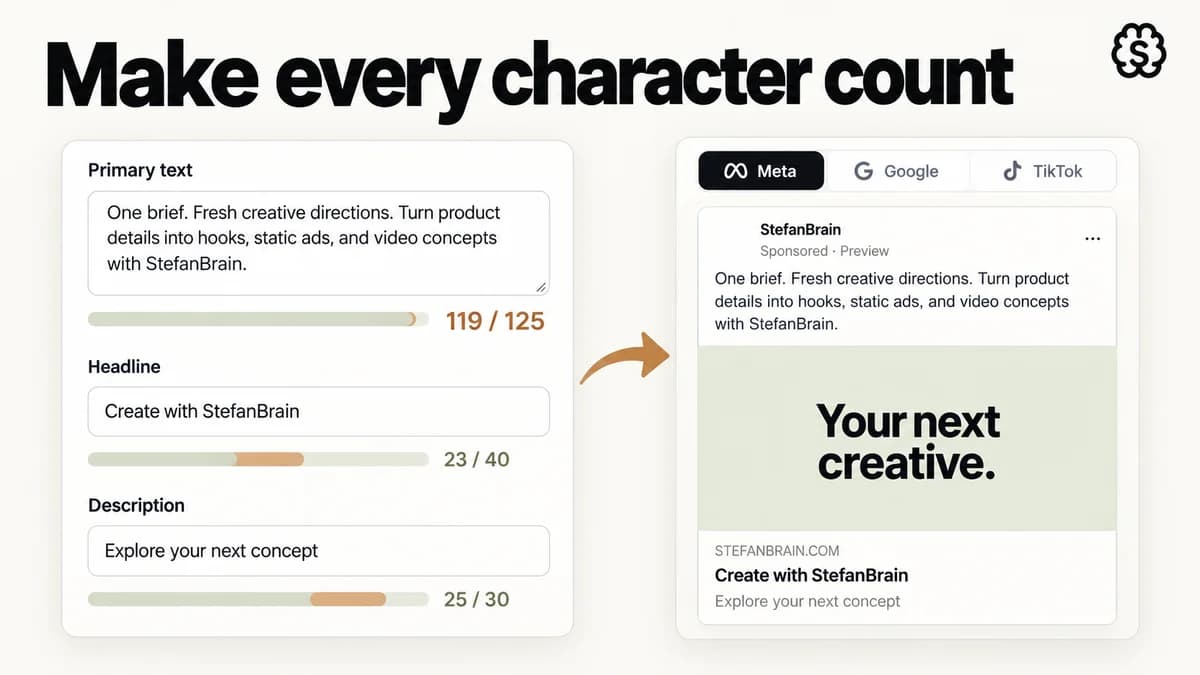
Use the Ad Character Counter on the actual copy fields, then inspect placement previews. Character counts alone do not establish readability or prevent truncation. Review the final combination of image, copy, and destination, especially when several variations share similar filenames or headlines.
Verify the destination and its tracking together
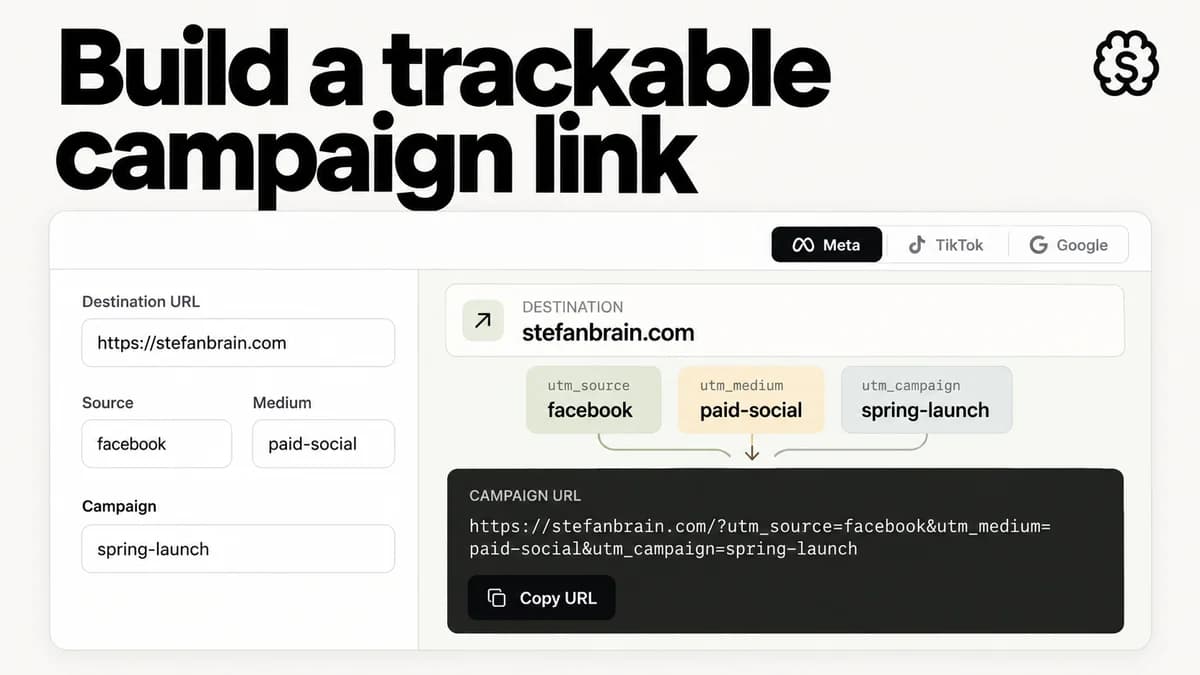
Build campaign links with a consistent naming convention using the UTM Builder. Keep source, medium, campaign, and content values stable enough to join creative records with analytics. The UTM tracking guide explains the taxonomy and the mistakes that make later reporting difficult.
Open the exact final URL after tagging it. Follow redirects and confirm the intended product, variant, price, and offer. Check that material query parameters survive where required. A working untagged product URL does not prove the campaign link takes the same route or preserves its reporting context.
Walk through the mobile destination and relevant selection states. Confirm availability, understandable shipping terms, and a usable route to checkout. Record what was actually inspected. A successful page visit is separate evidence from a completed payment, a persisted order, or a correctly attributed purchase event.
Match the account, access, and spending brief
Confirm the intended business and ad account before submitting a batch. Check the page or identity associated with the creative and the campaign context. A team working across several brands should verify identifiers rather than relying only on a familiar display name or whichever account was previously selected.
Check that the operator has the access needed for the task. The team access guide explains StefanBrain surface access and requests. Product access and external ad-account permissions are different checks. Being able to open a publishing surface does not establish permission to operate every connected account.
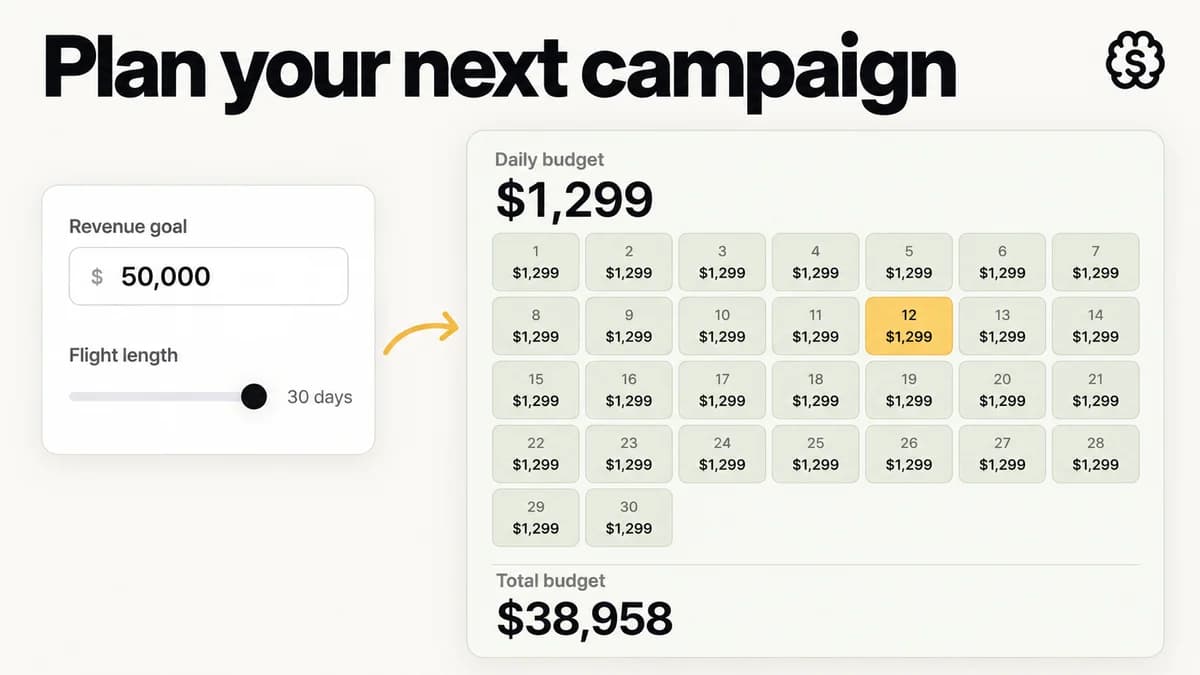
Keep the spending plan alongside the launch configuration. The Ad Budget Calculator helps explore a target-revenue and ROAS scenario. Check its assumptions against the actual budget available. Review configured amounts, currencies, schedules, and the level at which budgets apply before treating the batch as ready.
Check whether the offer can support the plan
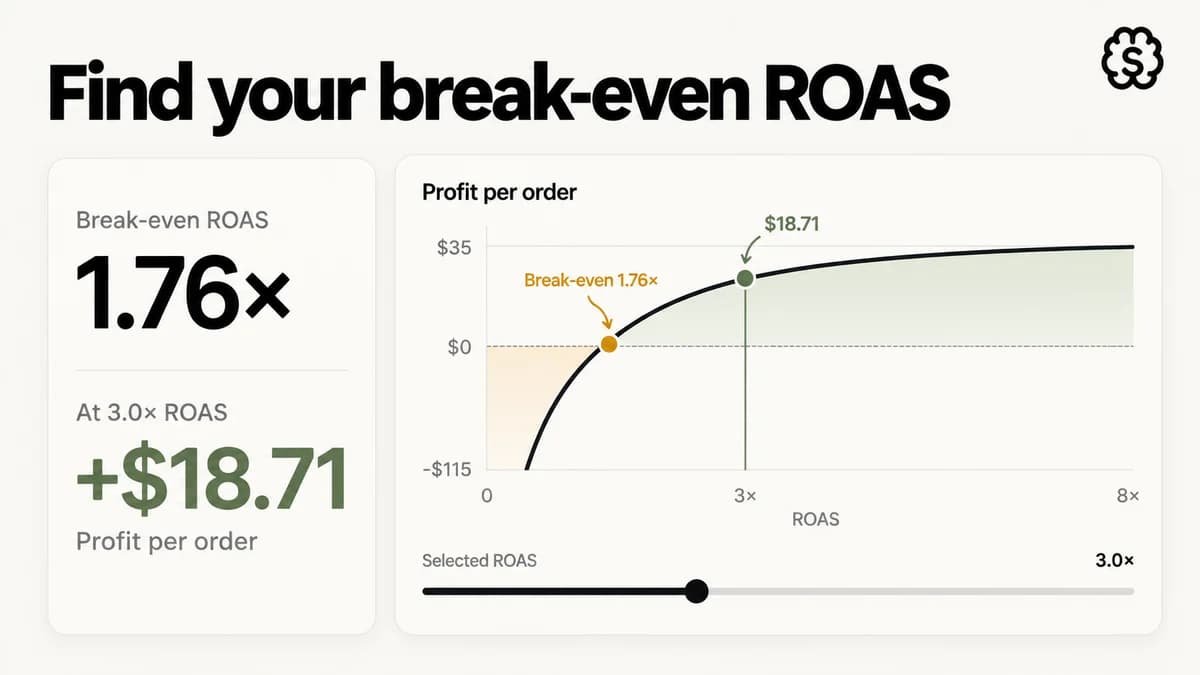
Use the Break-Even ROAS Calculator with the contribution assumptions for the actual offer. A regular-price margin may not apply to a discount or bundle. Keep fulfillment, shipping subsidy, payment fees, and returns consistent with the cost basis the team intends to use.
Write a primary outcome and the review conditions before launch. Decide which reporting window and attribution convention will be used. Distinguish a spending limit from a performance hypothesis. The former constrains execution; the latter is something the campaign still needs to test.
For creative comparisons, record what is intentionally different between variants and what should remain consistent. Ordinary delivery can allocate audiences and impressions unevenly. Avoid promising a controlled causal answer from a set of ads that merely share a campaign. The concept matrix guide helps preserve the intended questions.
Verify the publishing result before retrying
The Bulk Meta Publishing workflow takes approved static and video batches into the connected ad account. Review the reported result for the actual batch. Preserve returned identifiers and any item-level status available. A submitted request alone does not establish that every intended item was created successfully.
If a result is partial or unclear, reconcile what exists before retrying the entire batch. Use the available publishing result and the destination account to identify completed and unresolved items. Repeating a submission without that check can create duplicate work or leave the team unsure which version should run.
Do not infer active delivery from a successful creation result. Inspect the current account status and any unresolved setup or review issue. Avoid repeatedly changing creative in response to a delivery problem that may have a different cause. Record the issue and the specific action needed to resolve it.
Close the launch with a recoverable handoff
Once delivery begins, verify that the expected creative and destination are running. Check that spend and measurement appear in the intended reporting context. Allow for the relevant reporting and conversion delays when assessing performance. An empty early purchase column does not, by itself, prove either creative failure or broken tracking.
Record launch time, account identifiers, asset versions, URLs, spending scope, unresolved issues, and the next review condition. Keep this note with the batch. The person reading results should be able to recover what customers saw and what the team meant to learn without reconstructing the launch from scattered messages.
When preparing the next batch in the Static Ad Generator, bring forward the observed results and their limits. Distinguish a delivery fix from a creative insight. A useful launch process preserves that difference, so the next production decision rests on evidence from the campaign that actually ran.