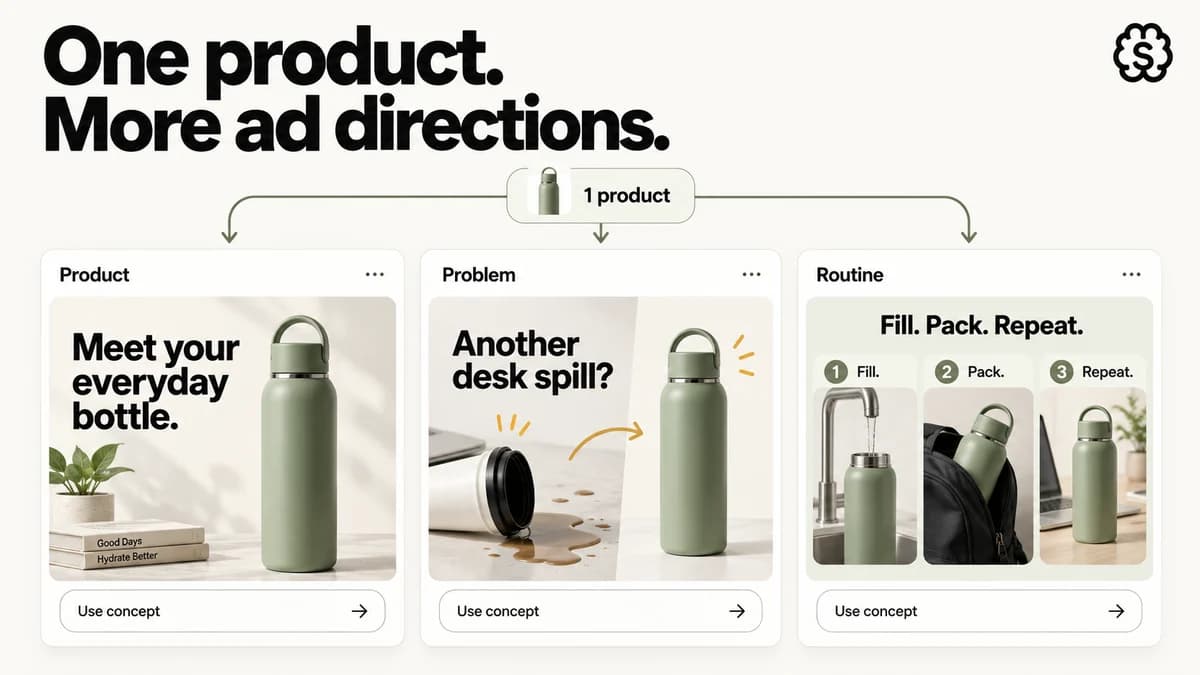
Count arguments before counting files
A concept is a distinct reason to consider the product. A variation changes the execution of that reason. A new crop, background, or headline treatment may matter, but it does not automatically create a new buying argument. Count both levels separately when planning a creative batch.
Imagine twelve ads for a hypothetical modular desk shelf. Every image shows the same product photograph with a slightly different version of more room for your work. That is a useful set of visual variations around one space-focused concept. It is not evidence that the team explored twelve different customer motivations.
Start a matrix with one row per argument. Give each row a stable identifier and a short description that a teammate can understand without opening the asset. If two descriptions mean the same thing, combine them or explain the meaningful difference before paying to produce both.
Build rows from questions buyers need answered
For the desk shelf, one row could demonstrate the usable space beneath it. Another could explain the modular arrangement. A third could address whether it fits the buyer's existing desk. A fourth could present a clearly defined bundle, if the bundle is a real offer the business intends to test.
Those rows need different evidence. The space demonstration needs a measured product view. Modularity needs an accurate assembly or arrangement example. Fit needs dimensions. The bundle needs verified contents, price, and terms. Do not force four rows into production if the brand only has support for two.
Use actual customer questions and product research where available. Label speculative motivations as hypotheses. A matrix built from invented customer insights can look organized while resting on weak assumptions. An honest evidence gap gives the team a research task; it should not be concealed by confident creative language.
Make each row a usable mini brief
For the fit row, write the actual question: will the shelf fit on a desk of this depth? Name the approved dimensions and the product configuration being shown. Specify a clear side or overhead view. Link the destination section that answers the same question after the click.
For the modularity row, specify the arrangement the sold product supports. Avoid generated attachments or configurations that do not exist. If the image requires optional accessories, make that distinction clear. The visual should remain a faithful demonstration after the copy is removed, not a diagram of an imagined product.
Add an exclusion when it prevents a likely error. The team might prohibit an unsupported weight claim or a comparison with an unnamed competitor. Keep exclusions specific to the concept. They should help the designer make accurate decisions without turning the brief into a generic approval document.
Choose variations that explore a real uncertainty
Once a row has a coherent argument, decide which execution question matters. For the fit concept, an overhead demonstration and a dimension-led composition might communicate differently. For modularity, an assembled view and a sequence of configurations might be worth comparing. Both variations should preserve the verified product facts.
Limit simultaneous changes when that helps interpretation. Keeping copy and offer stable while changing the demonstration can make the hypothesis clearer. It does not turn ordinary ad delivery into a controlled experiment. Platforms may allocate impressions unevenly and expose different people to each version.
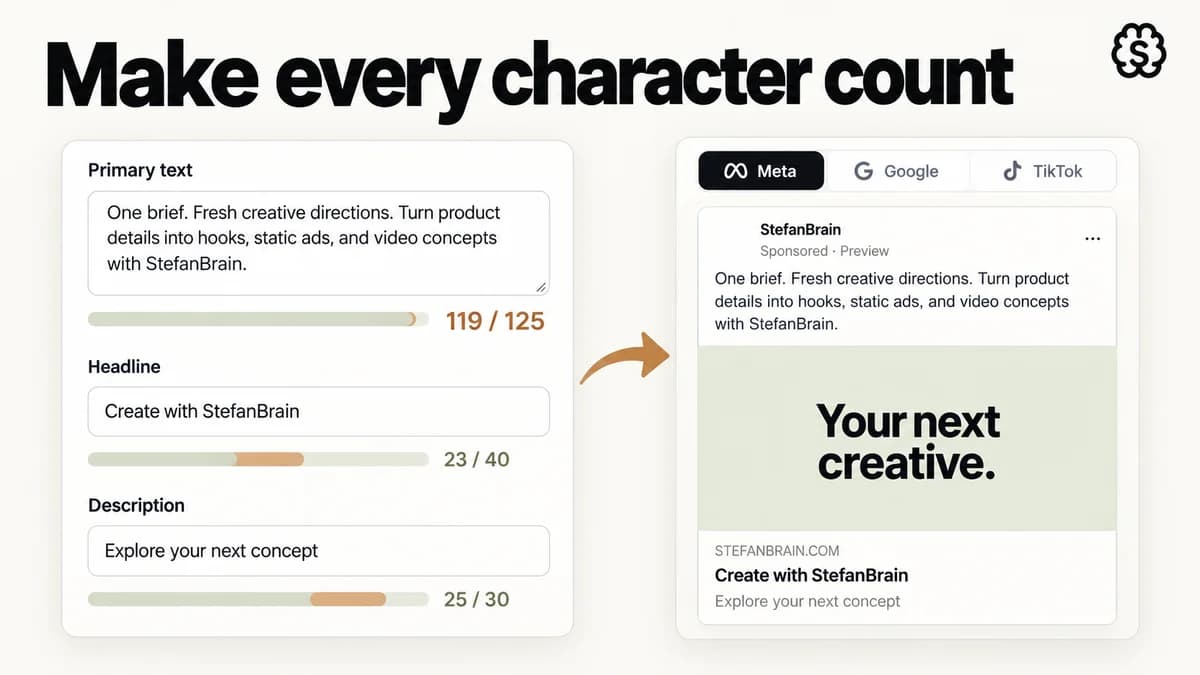
Use the Ad Character Counter to draft concise fields, then review the actual creative at placement size. Check the hierarchy, product recognition, and legibility of necessary terms. A row marked complete should contain an inspectable asset, not merely a file exported at the expected dimensions.
Let the available budget constrain the slate
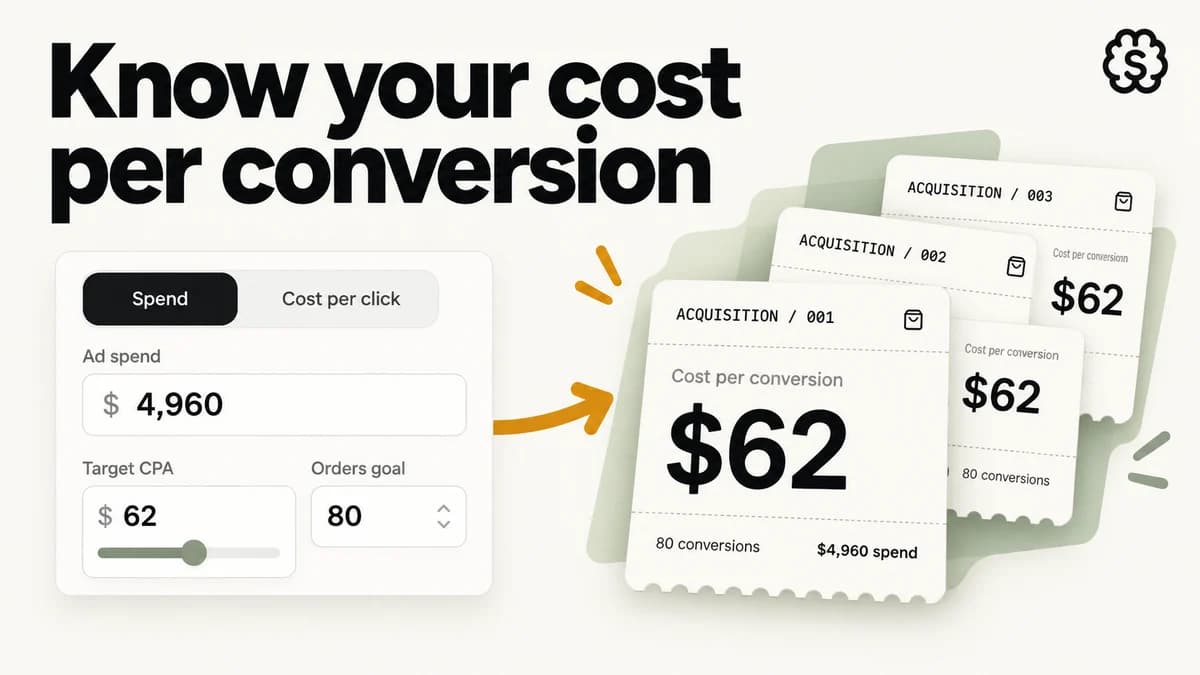
Estimate a plausible CPA from relevant history with the CPA Calculator. Match the conversion event, traffic type, and offer as closely as possible. A blended account CPA supported by returning customers may be an optimistic input for a new prospecting concept.
For a hypothetical planning example, assume $40 CPA and a target of 30 orders per concept. Four concepts would require $4,800 if those assumptions hold. At $300 daily spend, that is 16 days of total budget. Uneven delivery can leave some concepts short even when the total budget is spent.
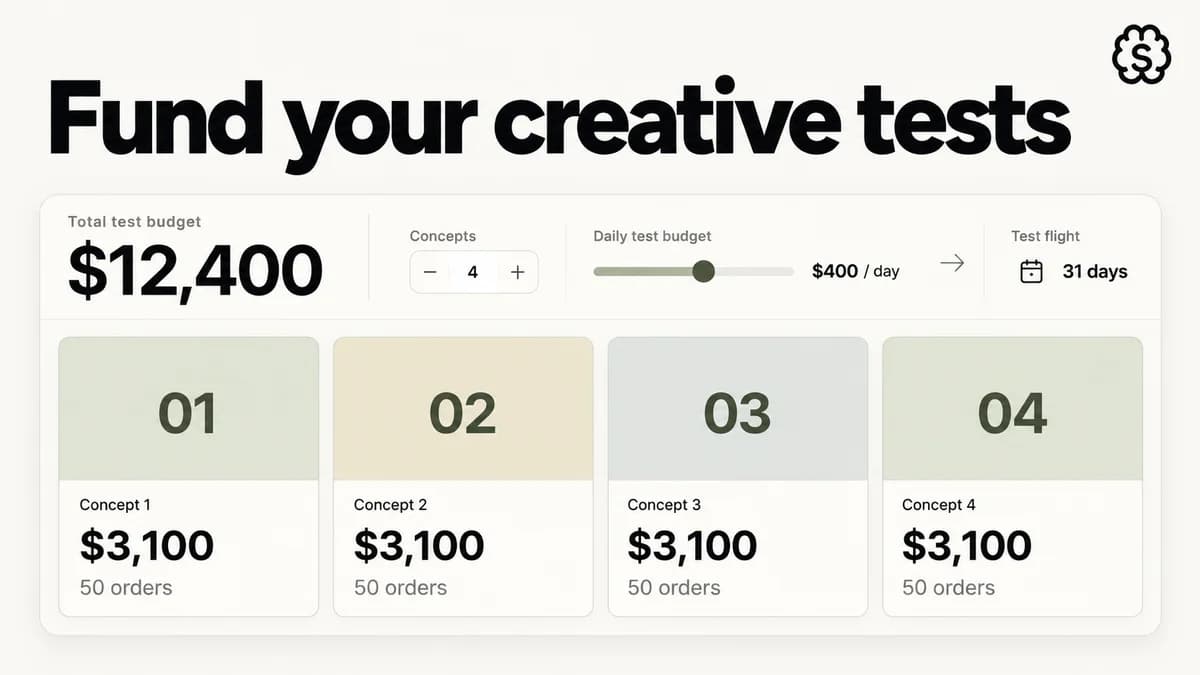
Use the Creative Testing Budget Calculator to adjust concept count, expected CPA, and the planning target. Thirty orders here is an illustrative input, not a statistical sufficiency rule. For an expensive or formal decision, plan the relevant experiment and sample requirements separately.
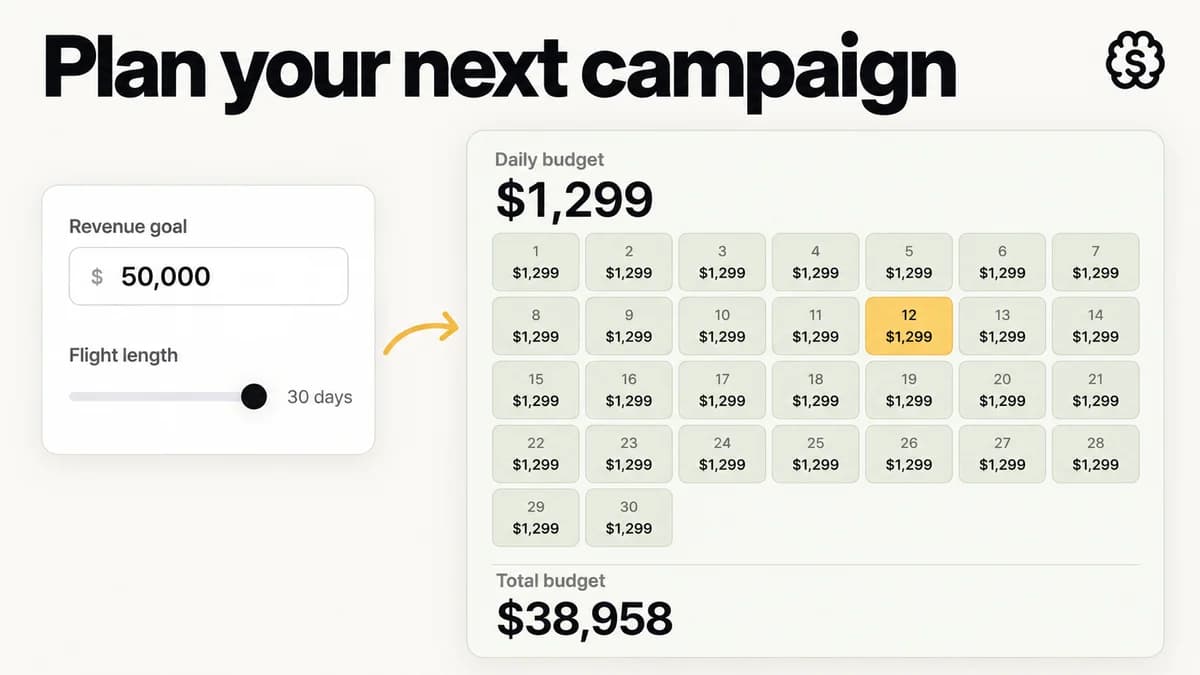
The Ad Budget Calculator can connect the broader revenue and ROAS scenario to an overall spend plan. A target entered into a calculator is not a forecast. If the proposed slate exceeds the money or time available, prioritize the most informative concepts instead of quietly underfunding every row.
Produce and approve by concept, then by asset
The Static Ad Generator workflow starts with product and angle direction. Feed it the mini brief and the approved references for each row. Review whether the resulting composition communicates the intended argument before asking for a large number of decorative alternatives.
Use Copy Chief to examine the wording once the visual and promise align. Ask it to retain verified facts and explain substantive changes. A stronger-sounding line that introduces a new performance claim belongs back in evidence review, even if the rest of the asset was already approved.
Approve the complete combination: image, copy, offer, and destination. Keep concept and variation identifiers attached through publishing and reporting. Otherwise the team may learn that a file called final-v7 performed well without knowing which product argument it represented or which text appeared alongside it.
Record learning at the correct level
Read results by concept and inspect variation-level delivery before drawing conclusions. A concept may appear weak because one execution received most of the spend. Another may have insufficient exposure to answer the question. Keep those limitations visible rather than forcing every row into a winner or loser label.
Write the next action in terms of the argument. Continue the fit demonstration with clearer dimensions, investigate a destination mismatch, or park the bundle until its economics improve. These notes tell production what to do. A list of green and red CPA cells does not supply the same direction.
Use the creative testing playbook for the wider budget and evidence workflow. The matrix makes distinct creative bets explicit and keeps them grounded. It preserves the connection between what the team intended to test and what actually reached the audience.