Ad Frequency Calculator

Enter impressions and reach from the same date range and get your frequency: how many times the average person has already seen your ad.

Frequency

3.0

Impressions per person: how many times the average reached person saw this ad in the window.

Try:

Total times the ad was shown. Use the Impressions column in Ads Manager for your date range.

Unique people who saw the ad at least once. Use the Reach column from the same report and date range.

3.0

Frequency

Bands are directional and tuned for prospecting. Retargeting runs hotter by design.

Reach as % of impressions

33.0%

Share of impressions that were a first look. The rest were repeat views.

Frequency is an average over the window you pulled. The same number is calm over 30 days and aggressive over 7, so always read it with the date range.

What is ad frequency?

Frequency is how many times the average person in your audience has seen your ad over a given window. Platforms report it directly, but it is just two numbers you already have.

Frequency = Impressions ÷ Reach

Impressions count every time the ad was served. Reach counts unique people served at least once. Divide them and you get impressions per person, the ad diet you are feeding each viewer.

Remember it is an average, not a cap. A frequency of 3 usually means many people saw it once and a smaller group saw it 8 or 10 times. The average tells you when to look closer; the distribution tells you who is being burned.

Worked example

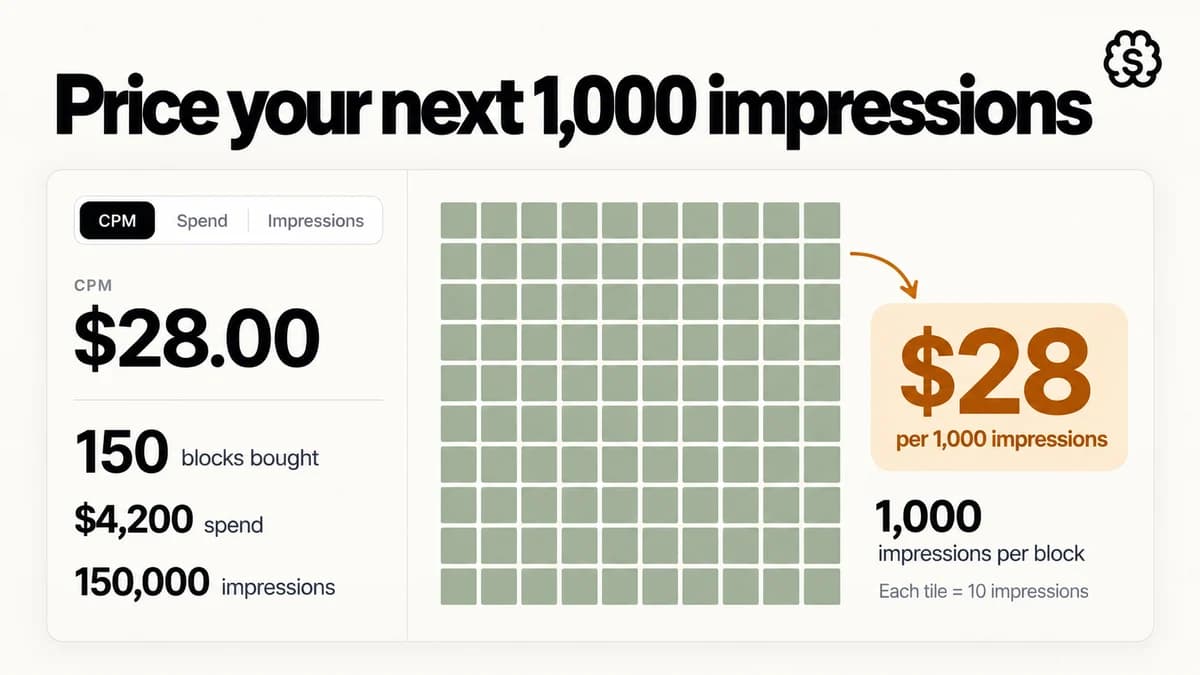
Take the calculator's defaults: 357,143 impressions delivered to 118,000 people. That is roughly what $10,000 buys at a $28 CPM. Run your own spend through the CPM Calculator to get your impressions figure.

357,143 ÷ 118,000 = 3.03 frequency
118,000 ÷ 357,143 = 33.0% of impressions were a first look

Each reached person saw the ad about 3 times. Only a third of the impressions you paid for introduced the ad to someone new; the other 67.0% were repeat views. Whether that is efficient reinforcement or expensive wallpaper depends on the window: 3.03 over a month is normal, 3.03 in a week on cold traffic is a crowding signal.

What's a healthy frequency?

There is no universal right number, but there are directional ranges most DTC media buyers plan around. Treat these as starting points, not rules.

Prospecting: roughly 1.5–3 per week. Cold audiences need a repeat or two before the message lands, but past that each extra view mostly buys annoyance. Broad audiences on healthy budgets often sit near the bottom of the range naturally.

Retargeting: higher is normal. The pool is small, warm, and closer to buying, so 5–10 per week is common. The tolerance still has a ceiling. If someone has seen the same retargeting ad 15 times without buying, the 16th impression is not the problem-solver.

Always pin the number to a window. Meta reports frequency over whatever date range you select, so a “frequency of 4” is meaningless until you say 4 per what.

The three fatigue signals to read together

Frequency alone never proves fatigue. A rising frequency with stable performance just means your audience is seeing a winner again. The diagnosis needs three lines moving at once:

Frequency up. The auction is running out of new people to show the ad to, so it re-serves the ones it has. CTR down. The people seeing it again have already decided. Check the trend with the CTR Calculator. CPM up. Engagement feeds Meta's quality signals, so a tired ad literally costs more per thousand to serve.

When all three move together for a week or more, the creative is done. One of the three moving alone usually has a duller explanation: seasonality, an auction shift, or a budget change.

How to bring high frequency down

Broaden the audience. Frequency climbs fastest when spend outgrows the pool. Widening targeting or going broad gives the delivery system new people before it recycles old ones.

Refresh the creative. Fatigue attaches to the ad, not the audience. A new hook, angle, or format resets the clock with the same people, which is why high-frequency accounts need a steady pipeline of concepts, not one hero ad.

Cap your retargeting windows. A 180-day retargeting window re-serves people who went cold months ago and inflates frequency on the least likely buyers. Tightening to 14 or 30 days concentrates spend on people whose intent is still warm.

Frequently asked questions

What is a good ad frequency?

Directionally: 1.5–3 per week for prospecting, higher for retargeting. But judge it by results, not the number. If CPA is holding at a frequency of 4, the audience is not tired yet. The number is a smoke detector, not a verdict.

What happens when frequency is too high?

You pay more for less. CTR slides as the audience tunes out, weaker engagement pushes CPMs up, and CPA rises from both ends at once. Past that, repeated exposure to an ignored ad can turn indifference into irritation with the brand itself.

Should frequency differ between prospecting and retargeting?

Yes, by design. Prospecting pools are large and cold, so low frequency is both natural and desirable. Retargeting pools are small and warm, so higher frequency is the point: you are deliberately re-contacting people with intent. Judge each campaign type against its own range, never a blended average.

Does Meta cap ad frequency?

Not in standard auction campaigns. Delivery optimizes for your objective and will happily re-serve a converting ad. Advertiser-set caps exist in reach-and-frequency (reservation) buying and reach-optimized campaigns, where you can specify something like 2 impressions per 7 days. For most DTC accounts, creative rotation is the practical frequency cap.

When should I refresh creative?

When the three signals align: frequency trending up, CTR trending down, CPM trending up, sustained for a week or more. Do not wait for the crash to start building. Concepts take time to produce and test, so winners should always have successors in the pipeline before they fade.

Why is my calculated frequency below 1?

A true frequency below 1 is impossible: every reached person saw at least one impression. If the calculator shows one, your impressions and reach come from mismatched scopes: different date ranges, one campaign vs. the whole account, or deduplicated reach against a partial impression count. Pull both numbers from the same report row.

Where StefanBrain fits

Every fix for high frequency eventually lands on the same desk: you need more good creative, faster. StefanBrain generates the static ads, video ads, and hooks that keep the pipeline ahead of fatigue, launches them to Meta, and reads the results back. Size the testing side with the Creative Testing Budget Calculator so each new concept gets a readable shot before your current winner burns out.

More free tools

Fatigue is a creative problem.

StefanBrain generates the fresh static ads, video ads, and hooks that reset a fatigued account, trained on 7+ years of DTC marketing IP.

Built for brands serious about growth.