What is ACoS?
ACoS, advertising cost of sale, is ad spend divided by ad-attributed revenue, times 100. It answers one question: what share of every ad-driven sales dollar went back into clicks. A 25% ACoS means $25 of ads sitting behind every $100 of ad revenue.
TACoS = Ad spend ÷ Total revenue × 100
Break-even ACoS = Contribution margin %
Lower is cheaper, but lower is not automatically better. An 8% ACoS on a product stuck on page three usually means underspending, not efficiency. ACoS only becomes a verdict next to your break-even, and break-even is set by margin, not by preference. That is why the calculator asks for your post-fee contribution margin alongside the spend numbers.
Worked example
The defaults model a month of Amazon advertising: $3,000 of ad spend driving $12,000 of ad-attributed revenue, inside $30,000 of total product revenue, at a 40% contribution margin after fees.
$12,000 ÷ $3,000 = 4.00 ROAS
$3,000 ÷ $30,000 × 100 = 10.0% TACoS
At a 40% post-fee margin, break-even ACoS is 40%. This account runs at 25.0%, which leaves 15 points of headroom. Read it in dollars: each $100 of ad sales carries $60 of product costs and fees, $25 of clicks, and keeps $15. The 10.0% TACoS says ads are a tenth of total revenue, so organic still drives most of this business.
ACoS is ROAS flipped upside down
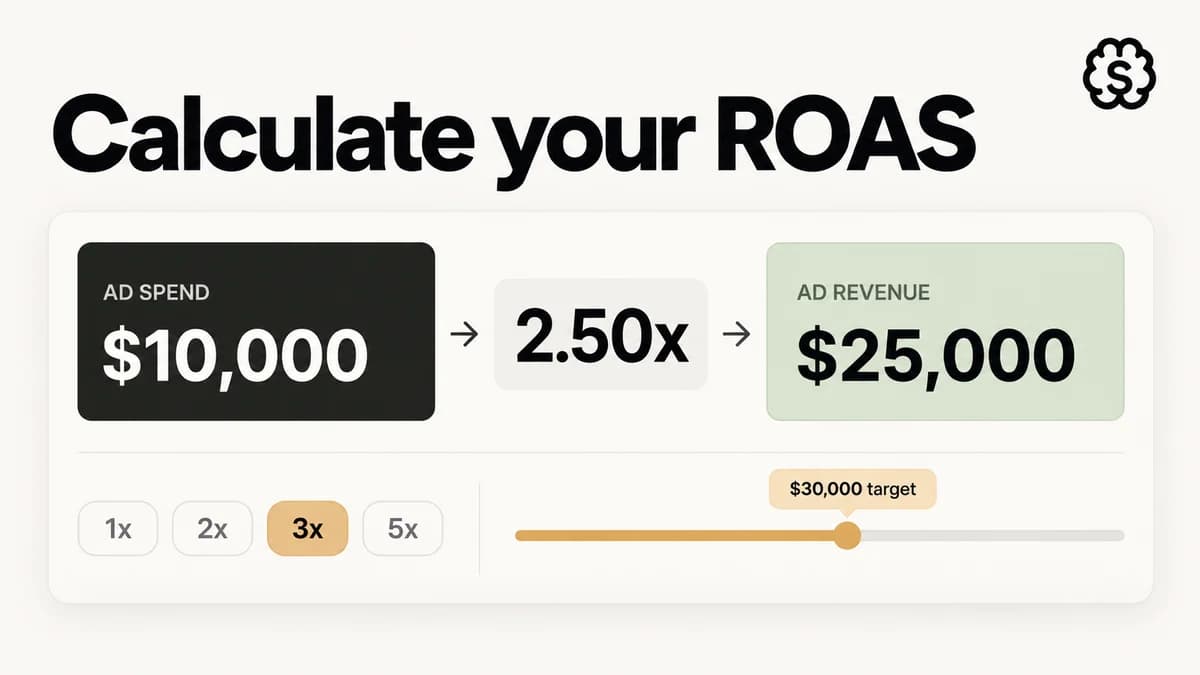
ACoS and ROAS are the same fraction, inverted. ROAS divides revenue by spend; ACoS divides spend by revenue. The algebra runs both ways: ACoS equals 100 ÷ ROAS, and ROAS equals 100 ÷ ACoS. The defaults prove it: a 25% ACoS and a 4.00 ROAS describe one campaign. A 20% ACoS is a 5.00 ROAS. A 50% ACoS is a 2.00 ROAS.
The split is tribal, not mathematical. Amazon consoles report ACoS; Meta and Google report ROAS. Cross-channel teams mangle goals at that boundary, so translate exactly: “hold ACoS under 25%” and “hold ROAS above 4.0” are the same instruction. If the rest of your reporting speaks the other dialect, the ROAS Calculator runs this page's math from that side.
Break-even ACoS comes from margin after fees
Break-even ACoS is not a target you choose. The margin left after landed COGS, the referral fee, and fulfillment IS the highest ACoS at which an ad sale still nets $0. Spend exactly that share on clicks and the order breaks even; every point below it is profit.
The common mistake is computing it from gross margin. A supplement with a 70% gross margin might keep 40% after a 15% referral fee, FBA fulfillment, and inbound freight. A 70% break-even and a 40% break-even imply opposite bid strategies on the identical product. Use the post-fee number, always.
The Break-Even ROAS Calculator runs the same audit cost line by cost line. If you have never itemized your per-order costs, start there, then bring the margin percentage back to this page's slider.
TACoS reads the whole business
TACoS, total ACoS, divides ad spend by total revenue, organic included. ACoS grades a campaign; TACoS grades the flywheel: how dependent the product is on paid traffic to make its number.
The pattern worth watching is falling TACoS with stable ACoS. Ads are holding their efficiency while organic sales compound underneath them, usually on the rank and reviews those ads helped buy. That is the organic halo working. Rising TACoS with stable ACoS says the opposite: paid is taking a bigger share of a flat business, and each incremental dollar is renting revenue rather than building rank.
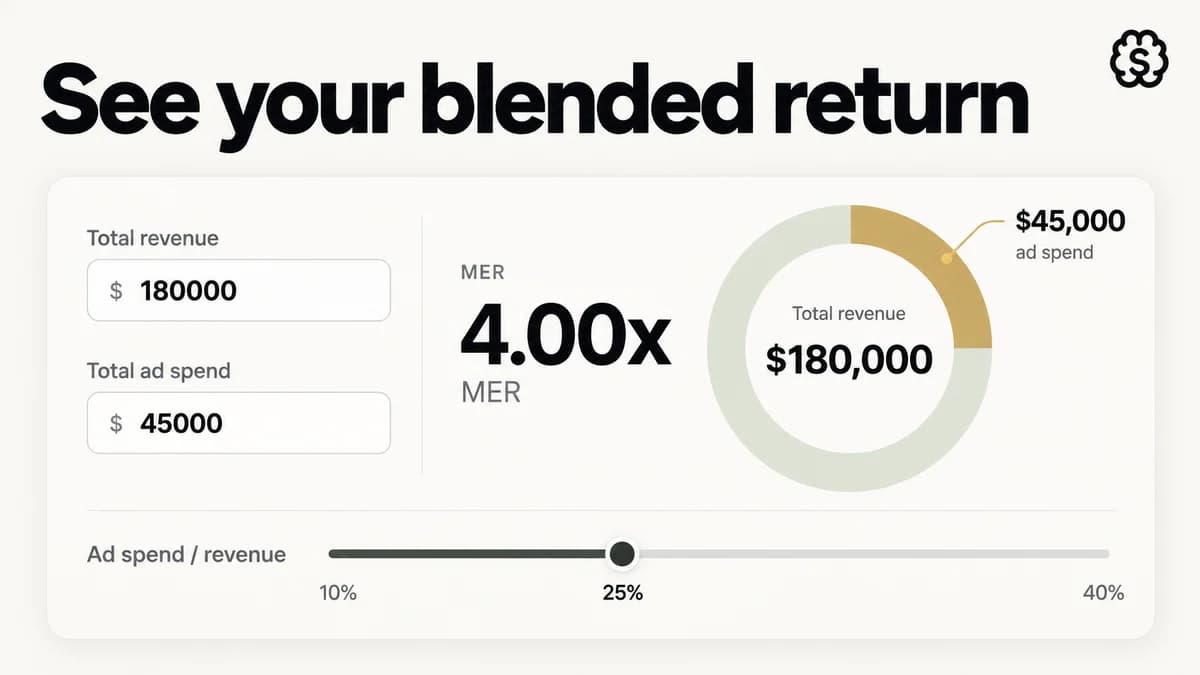
Off Amazon, the same instinct is called MER, just inverted: MER divides total revenue by total ad spend. A 10.0% TACoS and a 10.0 MER describe the same dependence. The MER Calculator runs that blended view for a whole store.
Frequently asked questions
What is a good ACoS?
There is no universal number, because break-even differs by margin. As directional context, established products often run between 15% and 30%, and launches deliberately run higher. A 30% ACoS is profitable at a 40% post-fee margin and a loss at 25%. Compute your own break-even first, then judge.
ACoS vs ROAS: which should I use?
They carry identical information, so use the dialect your team already speaks. ROAS equals 100 ÷ ACoS: a 25% ACoS is a 4.00 ROAS. Amazon consoles report ACoS while Meta and Google report ROAS. Keep each goal document in one dialect so targets survive translation.
What is TACoS and when does it matter more than ACoS?
TACoS is ad spend divided by total revenue, organic included. It matters more when the goal is rank and long-term share rather than this week's ad efficiency. A launch can run a 60% ACoS while TACoS holds at 12%, which is a controlled investment, not a leak. ACoS judges campaigns; TACoS judges the strategy.
How do I calculate break-even ACoS?
Start from price. Subtract landed COGS, the referral fee (15% for most categories, directional), fulfillment fees, and per-unit extras like returns. Divide what remains by price: that percentage is your break-even ACoS. Pull the fees from actual payout reports rather than the rate card, since size tiers and category quirks move the real number.
Should new products run above break-even ACoS?
Often yes, on purpose and on a timer. Early ad sales buy reviews, rank, and conversion data that organic sales later repay. The discipline is a ceiling and a deadline: for example, up to 1.5x break-even for 8 weeks, then judged on the TACoS trend. Drifting above break-even without a written decision is how launches turn into leaks.
Why is my ACoS rising?
Five usual suspects: CPC inflation in your auctions, broad-match terms creeping off target, competitors bidding your branded keywords, a listing whose conversion rate slipped, and seasonality. Segment branded from non-branded before reacting, since a blended rise often hides a stable core. And fix the listing before touching bids: conversion rate moves ACoS more than any bid change.
Where StefanBrain fits
This page hands you the target math; hitting it is creative and listing work. StefanBrain generates the ad copy, product imagery, and landing pages that raise conversion rate, which lowers ACoS at any bid level. To set the same guardrail in cost-per-order language, pair this page with the CPA Calculator.