Build one reporting row for the whole journey
Start with a single ad, a defined date range, and a consistent reporting setup. Collect spend, impressions, three-second plays, the chosen longer-view measure, clicks, and purchases. Record video duration, placement mix, audience, and destination. These details keep later comparisons from quietly changing the question.
Specify the click metric. Link clicks, outbound clicks, and all clicks are not interchangeable. Specify whether conversion rate uses clicks or site sessions. If your account reports attributed purchases, retain that label. An attributed purchase count is not automatically an estimate of purchases caused by the ad.
Keep the video itself beside the numbers. Write down the opening promise, the first product appearance, the demonstration, the proof, and the call to action. A metrics sheet becomes more useful when an editor can connect a weak stage with the exact scene or sentence that might explain it.
Work through a hypothetical video
Consider a hypothetical ad with $1,080 spend, 60,000 impressions, 12,000 three-second plays, 4,800 ThruPlays, 720 link clicks, and 18 attributed purchases. Use these counts only as a worked example. They are not a benchmark, a customer result, or a recommended performance target.
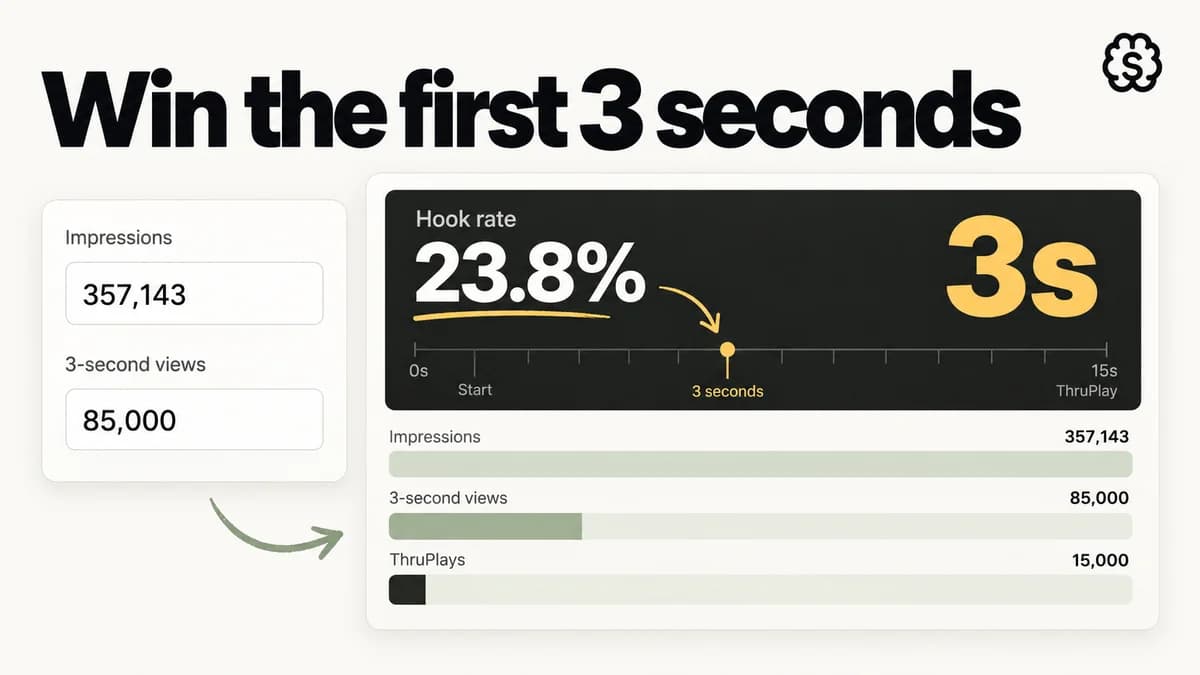
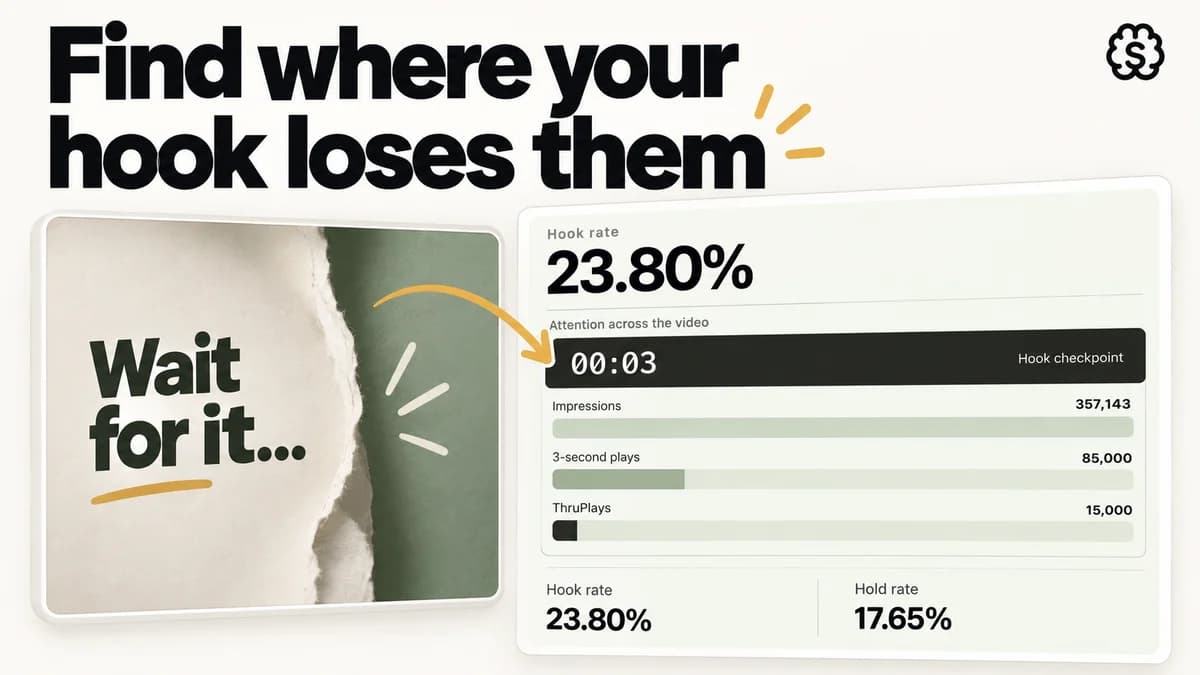
The Hook Rate Calculator uses three-second plays divided by impressions. Here, that is 20%. Its hold-rate convention divides ThruPlays by three-second plays, giving 40%. Other reports may use different hold definitions. Name the convention when sharing the result instead of assuming everyone uses the same denominator.
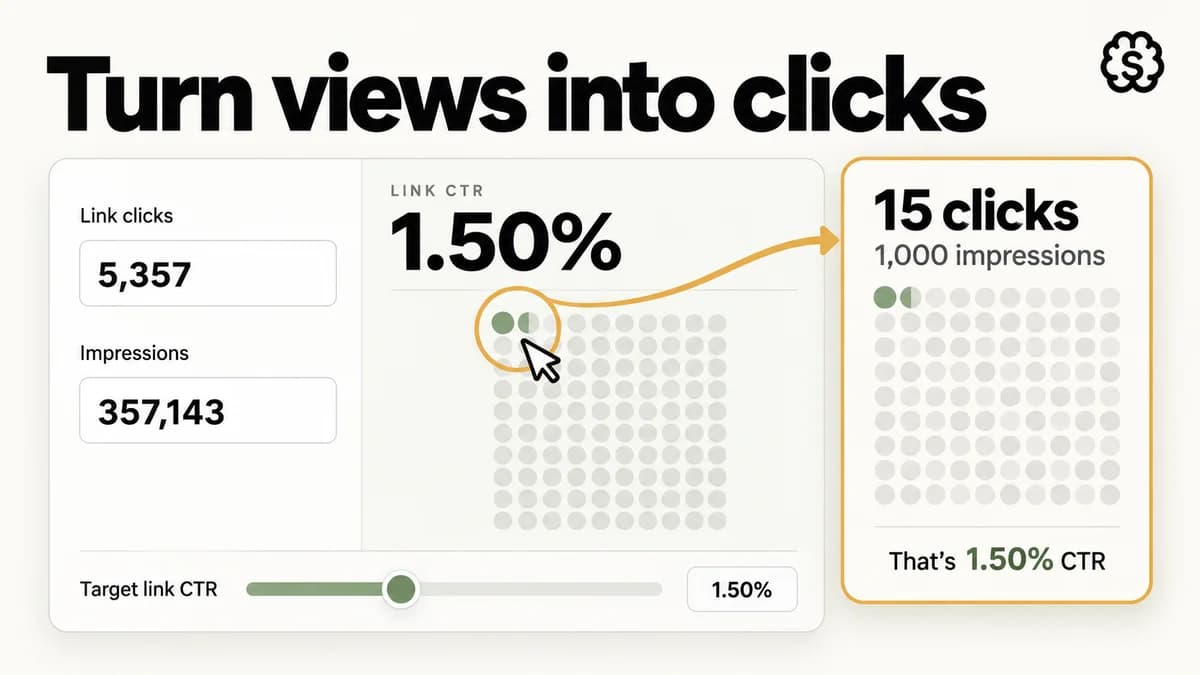
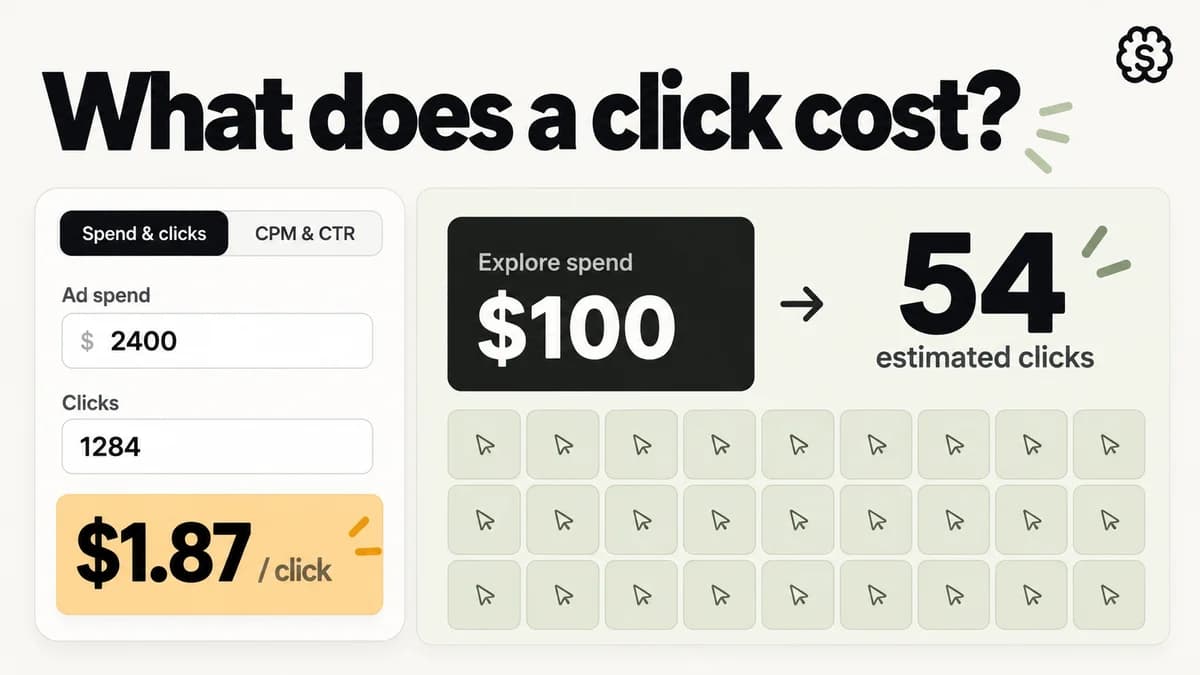
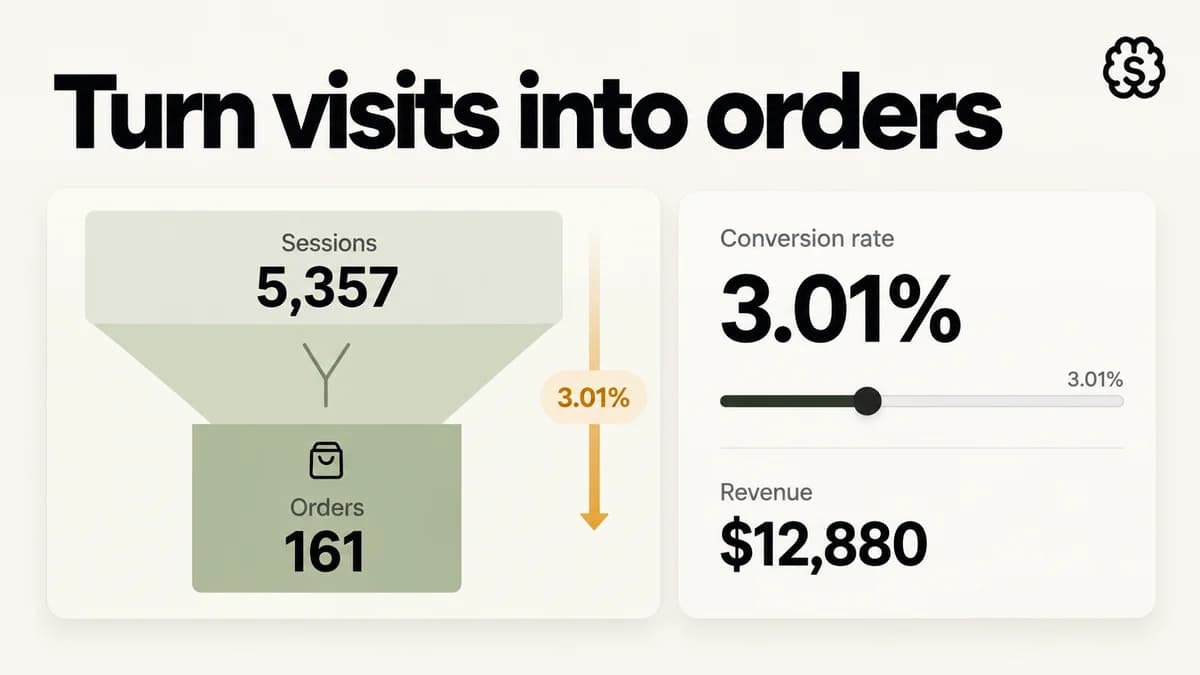
Use the CTR Calculator, CPC Calculator, and Conversion Rate Calculator to check those stages. These are separate diagnostic ratios, not a perfectly nested set of people. Viewing and clicking can occur in different sequences, and reporting systems may count events differently.
When the opening needs work
A weaker hook rate than a comparable prior version points toward the opening as a candidate for review. Inspect whether the first frame communicates the subject at phone size. Listen to the first sentence. Check whether the viewer can understand the premise without waiting for a long introduction.
Replace vague scene setting with a specific situation the intended buyer recognizes. For a hypothetical travel organizer, show the packing problem or the actual compartment layout. Avoid a surprising opening unrelated to the product. Attention from the wrong expectation can increase views while making the eventual offer less persuasive.
Keep the body and offer consistent when exploring opening variations, where practical. That makes the creative hypothesis easier to interpret. It does not make platform allocation randomized. Record changes in audience, delivery, or placement before attributing a performance difference entirely to the first three seconds.
When viewers stay briefly, then leave
A reasonable opening response followed by weaker continued viewing suggests inspecting the transition into the body. Does the video answer the question it raised? Does it introduce a different product or problem? Is the demonstration delayed by a repeated headline, brand introduction, or unrelated montage?
Map each scene to a job: establish relevance, explain the product, demonstrate a feature, support a claim, or describe the offer. Remove scenes that repeat a job without adding information. This is an editorial hypothesis about clarity. A shorter version still needs to be evaluated with actual traffic.
Compare duration carefully. A short video and a long video do not offer the same opportunity for continued viewing. The calculator's ThruPlay-based hold measure is not a duration-neutral quality score. Inspect comparable lengths and the available retention report before deciding that one format has a stronger body.
When viewing does not become useful traffic
If viewers watch but few click, inspect what the video asks them to do and why that action is worth taking. The product may be entertaining without being relevant. The offer may appear too late. The next step may be unclear, unavailable, or inconsistent with the opening promise.
Review the final product view and destination together. If the video demonstrates one configuration, the destination should help buyers find that configuration. If the offer mentions a bundle, show what the bundle includes. A sharper call to action cannot solve uncertainty about what the customer will receive.
Avoid assuming a click is required for every reported conversion. Attribution settings can credit different interaction paths. Use the click-based ratios here to inspect one path through the funnel, then compare them with your account's reporting definitions. Do not force incompatible metrics into an apparently tidy equation.
When clicks arrive but purchases do not
Open the exact ad link on a phone. Confirm the correct product, variant, price, availability, and offer. Check loading, readable text, selection controls, shipping information, and the route to checkout. A mismatch after the click can make a sound creative idea look commercially weak.
Compare buyer expectations with the page. Did the opening imply a result the product page cannot support? Did an unusually broad promise attract visitors outside the intended use case? The CRO workflow can help inspect the destination and organize possible fixes. Each suggestion still needs human review and validation.
Also check measurement and timing. Recent clicks may not have completed their conversion window. Purchase events may be duplicated or missing. Refunds can change the economic result later. Resolve reporting problems before rewriting the creative in response to a number that does not represent the intended outcome.
Brief the next edit as a testable change
Write one observation, one plausible explanation, and one proposed edit. For example: viewers leave before the interior demonstration; the introduction may delay the promised answer; move the demonstration earlier. Keep the original and revised assets, reporting windows, and destination details together so the comparison remains recoverable.
The Video Ad Generator workflow supports developing video concepts and variations from a brief. Give it the specific edit and the verified product references. Review generated demonstrations and spoken claims. A UGC-style execution should never be presented as a real customer's experience when that experience was invented.
Judge the next version across the same journey. A higher hook rate with worse acquisition economics may still be a poor trade. A lower view metric with better qualified traffic may deserve another test. The useful output is a better explanation of what to change next, not a trophy for the largest percentage.