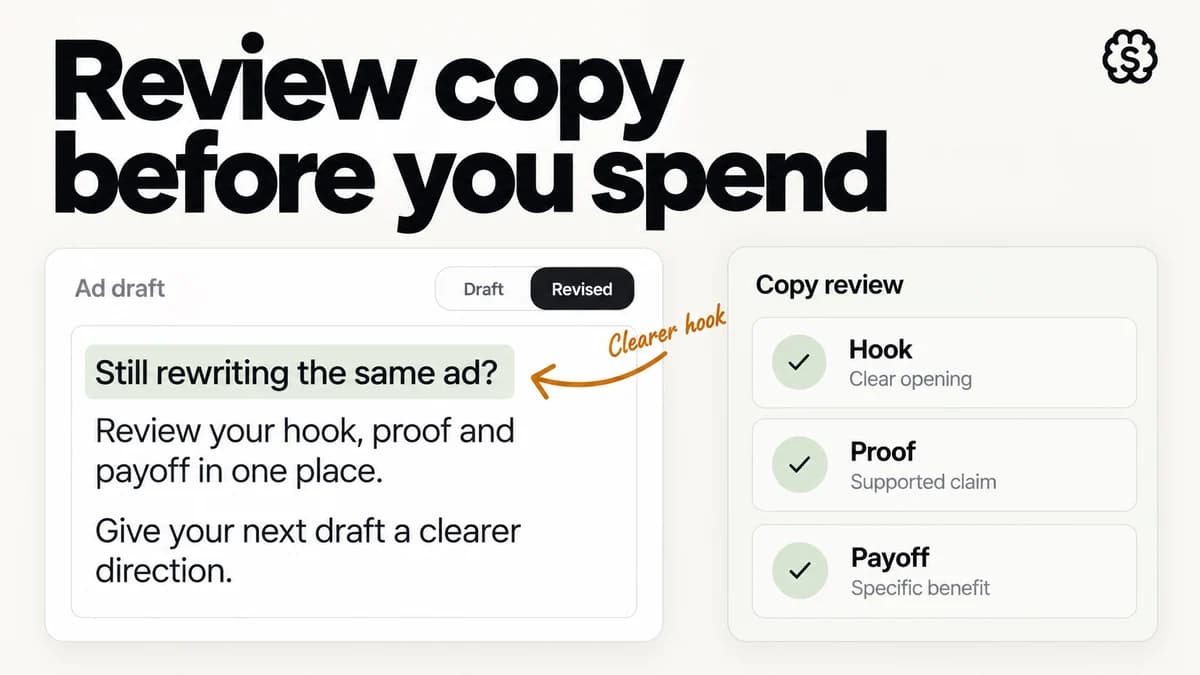
Read the argument before editing the sentences
An ad can sound confident while leaving the buyer with basic unanswered questions. What is being sold? Why is it relevant now? What supports the promise? What happens after the click? Review those questions before spending a meeting choosing between two adjectives.
Collect the complete experience first. Read the primary text, headline, visual, destination page, and offer terms together. A sentence that works beside a demonstration may become vague beside a product photograph. A headline that promises a bundle becomes misleading when the destination shows only the single item.
For each pass, record one finding and one proposed correction. Separate factual errors from unclear writing and from untested creative ideas. An incorrect price needs correction before launch. Two plausible hooks need a test. Calling both issues copy quality hides the different decisions they require.
Check whether the promise is specific and supportable
Start with the main claim. Underline the outcome or advantage the reader is asked to believe. If you cannot identify it, the ad may contain a description without an argument. If you can identify three unrelated promises, decide which one should lead this execution.
Use a hypothetical insulated lunch bag as an example. A draft says it is the ultimate lunch upgrade for busy people. That offers enthusiasm without a concrete reason to care. Product facts might instead support a removable divider, a particular capacity, or a lining that can be wiped clean.
Do not turn those facts into a performance guarantee. Insulation alone does not establish a specific safe storage duration. A capacity claim needs the dimensions or demonstration to support it. The strongest available promise is the one you can make precise and substantiate with the evidence you actually hold.
Make the proof carry its share of the work
Every consequential claim should have a proof source. Match a dimension claim to the product specification. Match a feature claim to the sold configuration. Match a quoted experience to the original review and permission record. Keep the source beside the draft so approval does not depend on memory.
Ask whether the visual proves the same thing as the copy. A lunch bag photographed closed cannot demonstrate its divider layout. An interior image with the actual containers may help, provided the scale and included accessories are clear. Generated imagery still needs this check against real product references.
Treat unsupported superlatives as a signal to investigate. Best, safest, and guaranteed introduce claims that a pleasing rewrite cannot validate. Remove or narrow them when support is missing. Do not invent a testimonial, research result, award, or customer count to fill an otherwise empty proof section.
Rewrite the objection, not just the opening
Suppose customer feedback repeatedly asks whether containers shift around inside the bag. That is a usable objection when the feedback is real and relevant. Lead with the removable divider and show its layout. Avoid claiming that nothing ever spills unless you have evidence for that stronger statement.
This draft gives the buyer a feature, its practical role, and a next step. It still needs the actual product name, verified configuration, and an appropriate visual. It is an example of an argument structure, not a universal winning ad or a claim about a real brand's results.
Now check the destination. The linked page should show the interior layout and dimensions near the relevant product information. If the buyer must search a separate FAQ, fix that handoff. The message match guide covers this review across the whole landing experience.
Review the offer and the next step
Check the live price and any offer conditions against the approved campaign. State which product or bundle qualifies, what is included, and which material conditions affect the decision. A copywriter should not have to infer whether a discount applies to every variant or only selected stock.
Read the call to action literally. If it invites readers to see dimensions, the link should make that task easy. If it asks them to shop a bundle, the correct bundle should be available. A strong imperative does not compensate for a destination that changes the proposition.
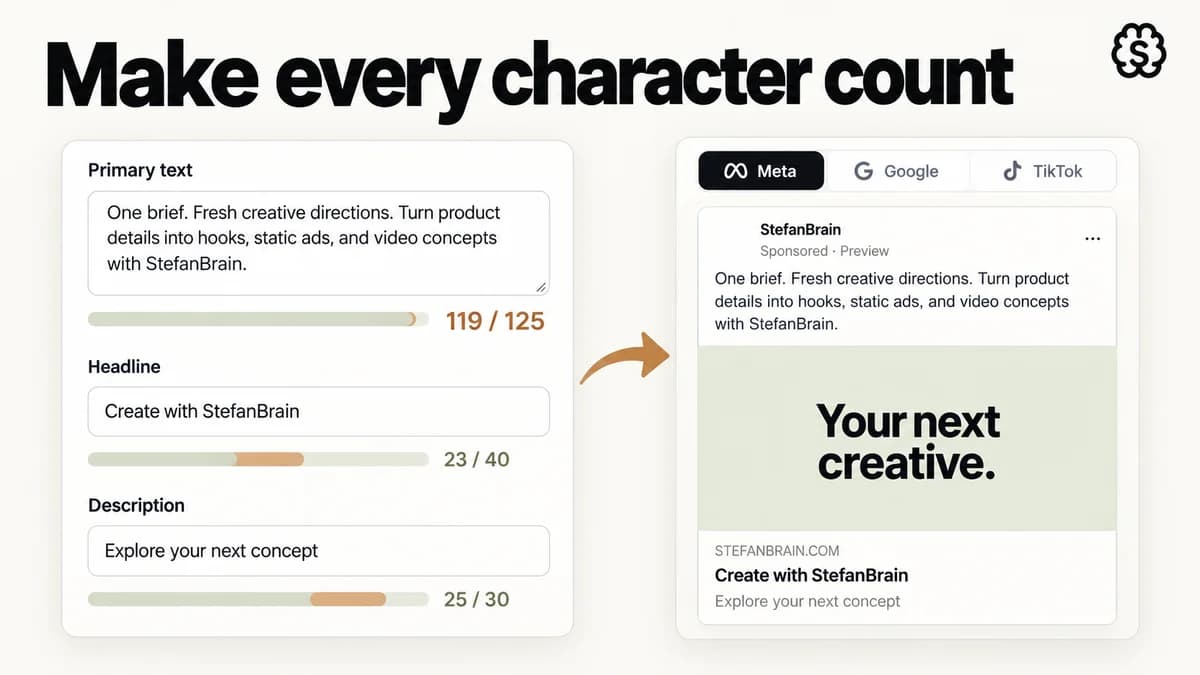
Then shorten without deleting necessary meaning. The Ad Character Counter helps compare draft lengths and platform fields. Inspect the real placement preview as well. A count does not guarantee every word will appear in every placement, device, or collapsed text state.
Decide what a copy test can tell you
Choose a primary outcome before launch. For a purchase campaign, clicks can diagnose attention, but purchase economics usually determine the business decision. Define the audience, destination, offer, reporting window, and attribution convention you will use. Keep these comparable when interpreting a change in copy performance.
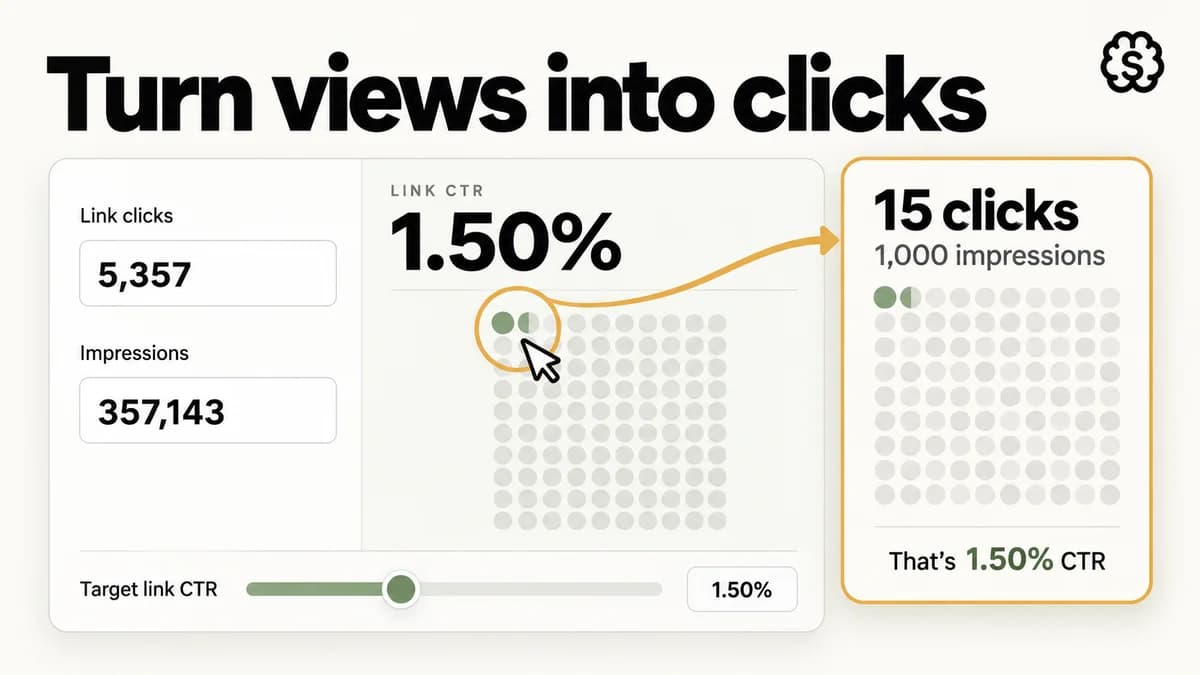
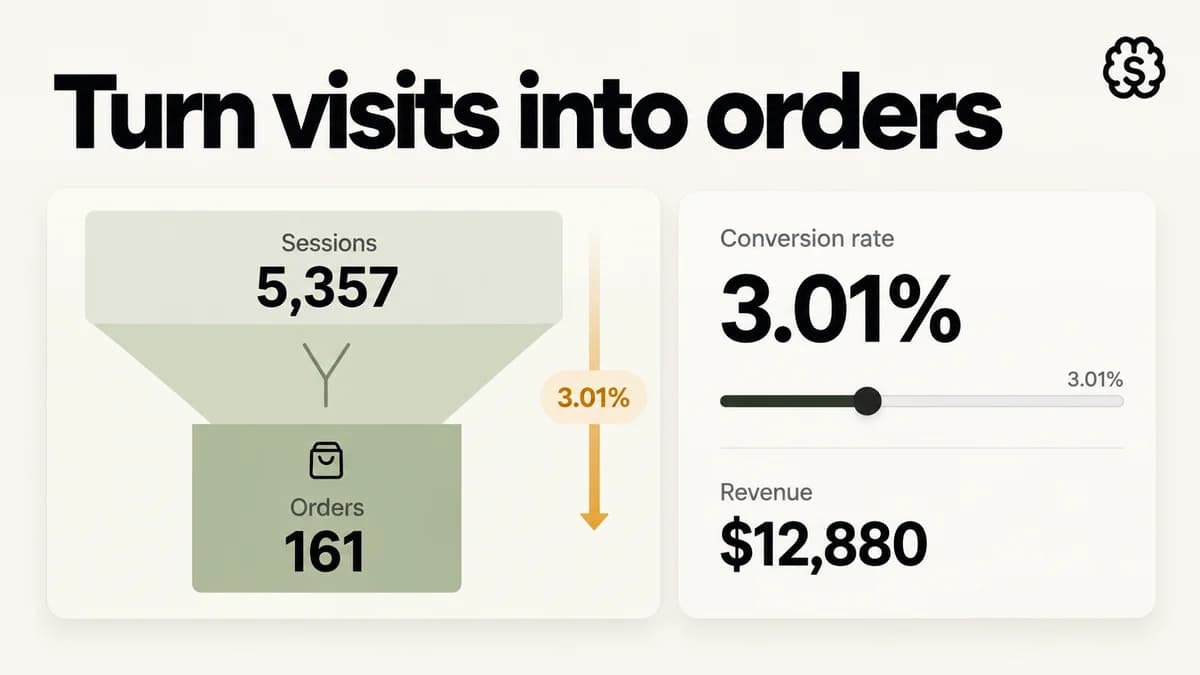
Use the CTR Calculator for the click response and the Conversion Rate Calculator for the next step. Record each denominator. Orders divided by clicks and orders divided by site sessions answer different questions. Do not swap them halfway through a review because one looks better.
Suppose one version earns more clicks but a smaller share of visitors buys. The copy may have widened appeal beyond the intended customer. The page may also have changed, traffic may differ, or results may still be noisy. Inspect those possibilities before declaring the new headline either a winner or a failure.
Separate editorial approval from performance evidence
An editorial review can establish that an ad is accurate, understandable, and ready to test. It cannot establish that the ad will outperform an alternative. Keep that distinction in the approval note. Otherwise a sensible copy recommendation becomes an implied promise the reviewer never had evidence to make.
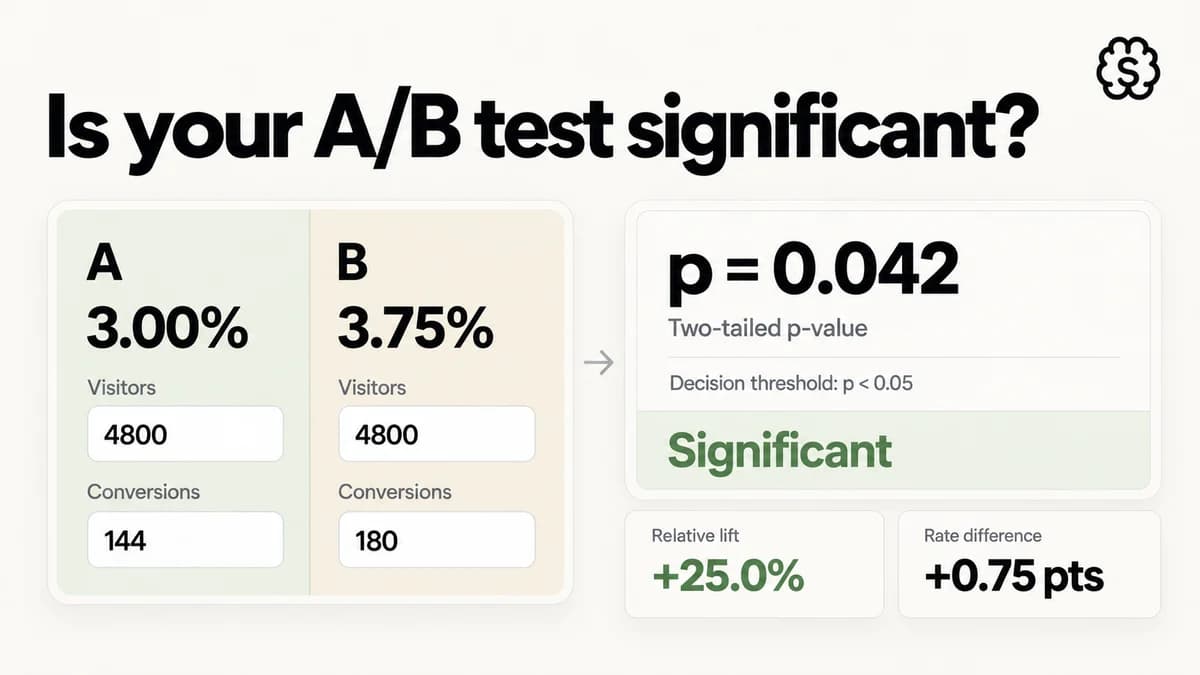
For a properly randomized conversion experiment, the A/B Test Significance Calculator can help interpret observed counts. Its result does not repair biased assignment or repeated early stopping. Ordinary platform delivery across ads may expose different audiences to each version, so describe those comparisons with appropriate limits.
The Copy Chief workflow supports drafts and rewrites with reasoning. Supply the evidence pack, buyer objection, and destination rather than asking only for punchier copy. Review each suggestion using this checklist, approve the version you can defend, and record what the next test still needs to establish.