Begin with how the current order earns money
A shipping threshold or bundle changes several parts of an order at once. Customers may add products, receive a discount, pay less shipping, or choose a different configuration. Evaluate those changes together. A higher average order value can still produce less contribution after the offer's costs.
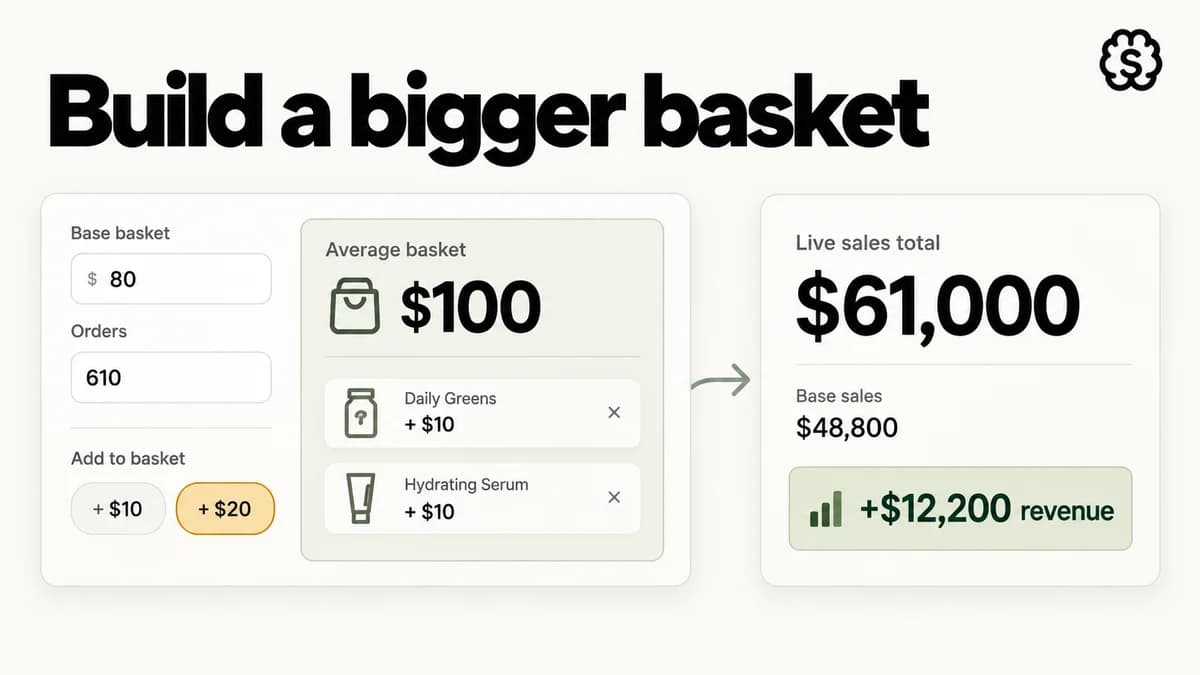
Use the AOV Calculator to establish revenue per order with a consistent revenue definition. Inspect the distribution of basket values as well. An average does not reveal how many shoppers are close to a proposed threshold or how many already spend above it.
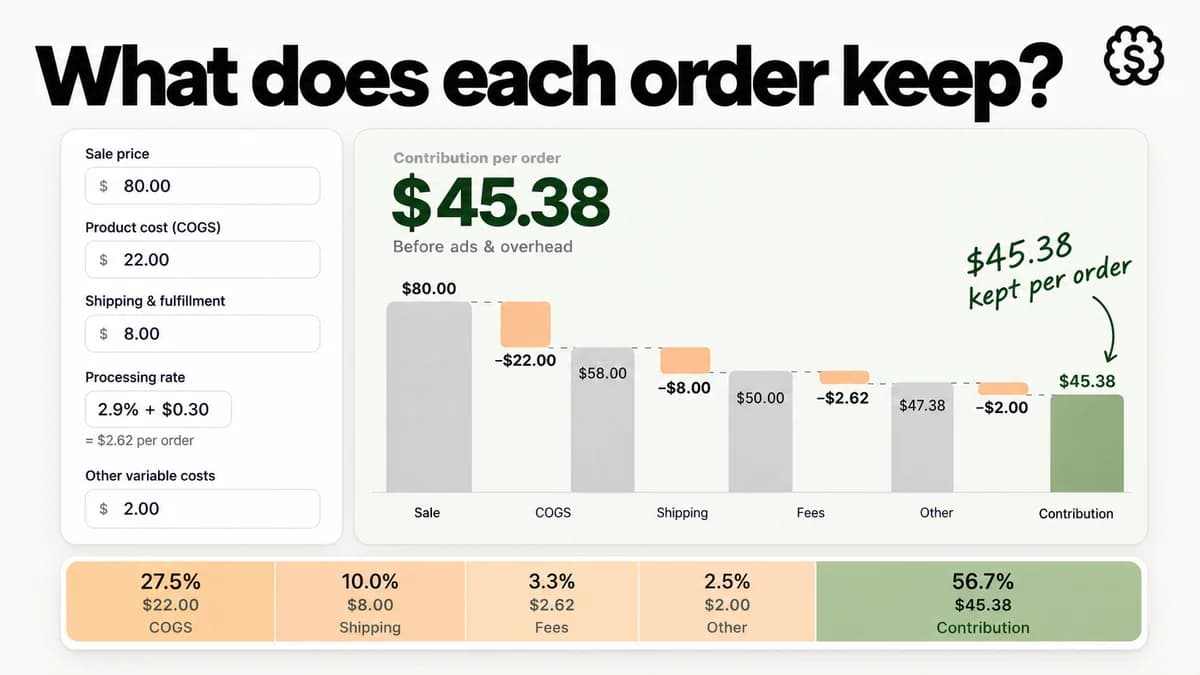
Record product contribution, shipping costs and charges, fulfillment, payment fees, and expected returns on the same basis. The Contribution Margin Calculator helps organize the order economics. Separate costs already included in margin from costs you plan to subtract later, especially the shipping subsidy.
Treat the threshold as a hypothesis
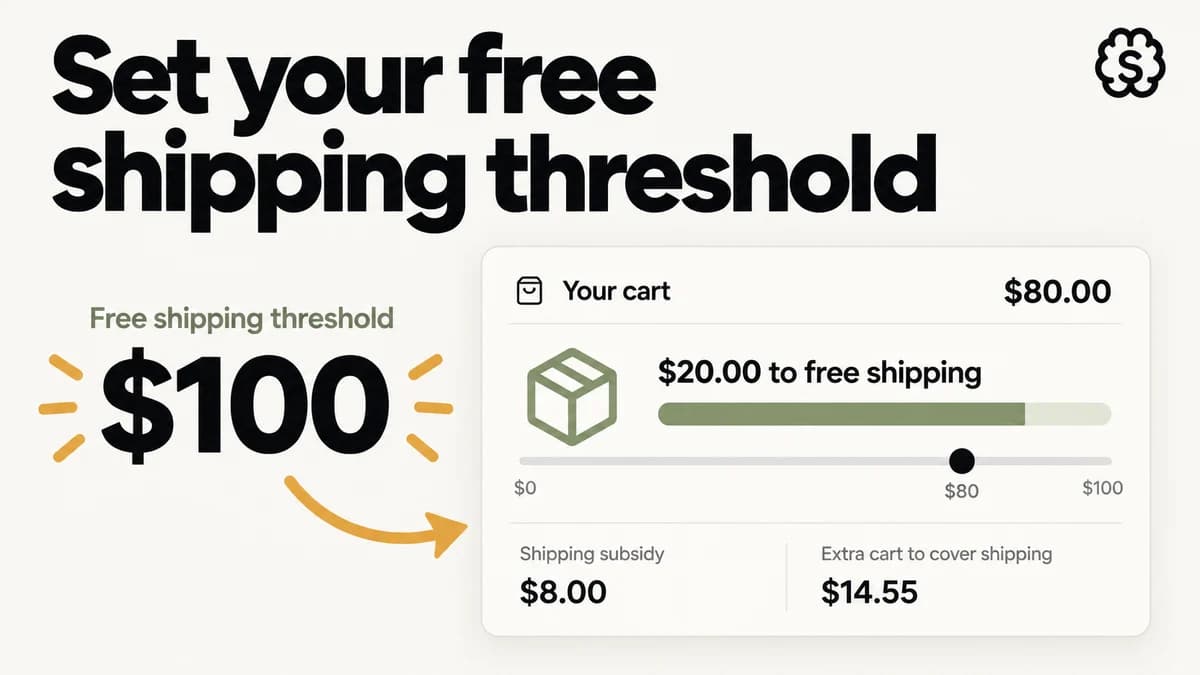
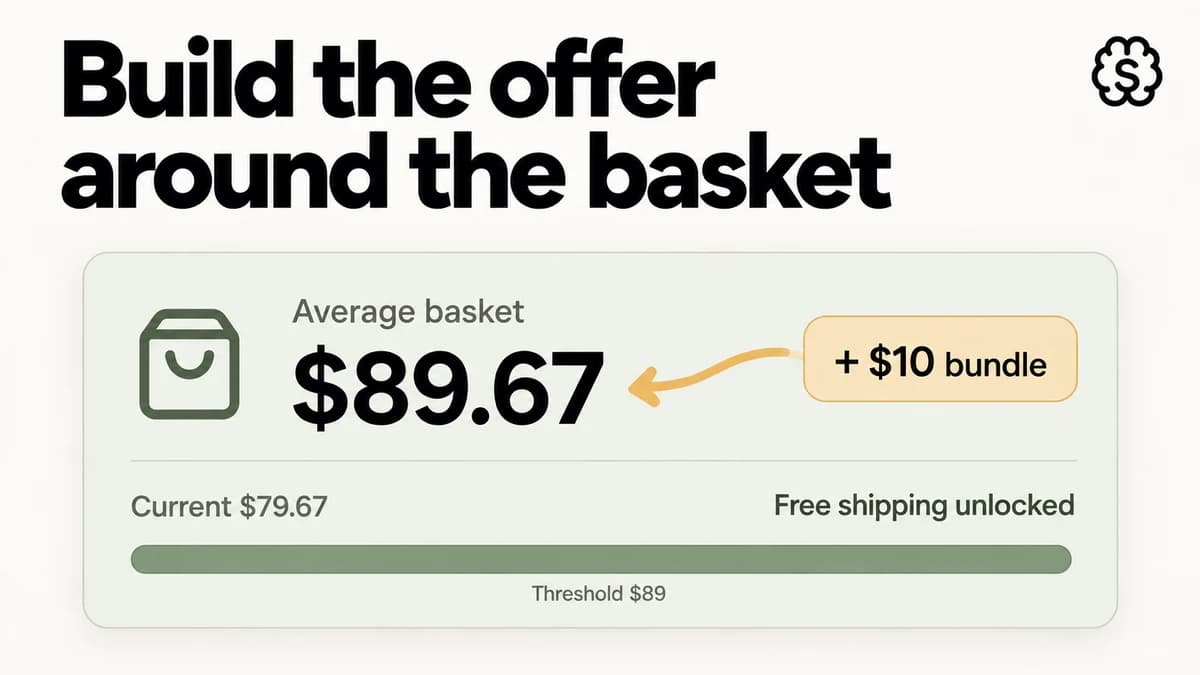
The Free Shipping Threshold Calculator proposes a threshold using AOV and a chosen uplift percentage, rounded to the nearest $5. It also calculates the extra merchandise contribution needed to cover the shipping cost entered. This is a planning heuristic, not a forecast of customer behavior.
For a hypothetical store with $60 AOV, a 25% uplift input produces a $75 threshold. That does not establish that shoppers will add $15. Some may find a relevant add-on, some may leave, and some may already qualify. Review actual baskets and product prices before choosing the experiment.
Look for useful products near the gap between typical carts and the proposed threshold. An add-on should fit the buying situation and remain attractive on its own terms. A threshold that forces an awkward or irrelevant purchase may increase friction even when its spreadsheet contribution looks favorable.
Work through the incremental shipping math
Assume a hypothetical customer moves from $60 to $75 of merchandise. Assume the added merchandise carries 60% contribution before shipping. The extra $15 contributes $9. If the offer newly absorbs $7 shipping that the customer previously covered in full, the change adds $2 contribution.
The subsidy definition matters. If the store already covered part of shipping, subtract only the additional subsidy for this comparison. If the original shipping charge exceeded shipping cost, giving it up can also remove shipping margin. Include the actual change rather than automatically subtracting a carrier bill from every scenario.
This example assumes other variable costs remain unchanged or are already included in the margin input. Additional picking, packaging, payment fees, or returns can change the result. It also assumes the customer would otherwise have completed the $60 order, a counterfactual you cannot directly observe for that individual.
Include customers who would already qualify
The moved order is only one group. Customers already buying above $75 may receive free shipping without adding merchandise. Under the same assumption that they previously covered the full $7 cost, each such order loses $7 contribution when the new subsidy is introduced.
Consider a hypothetical mix with 100 moved orders gaining $2 each and 100 already-qualifying orders losing $7 each. The combined change is negative $500. This excludes new conversions and all other behavioral changes. It shows why a favorable example for one shopper cannot establish the result for the whole offer.
Model at least three groups: shoppers who add items, shoppers who already qualify, and shoppers whose purchase decision changes. Include the possibility of lost conversions or delayed purchases. Then use observed data to update the assumptions instead of treating the threshold calculator as a complete demand model.
Evaluate a bundle as a changed basket
A bundle can make complementary products easier to understand and purchase. It can also discount items customers would have bought separately. Compare the proposed bundle with the realistic alternative basket, including product mix, total price, variable costs, and shipping treatment. The list price of every component is not automatically the lost-revenue baseline.
State what the bundle includes and whether shoppers can buy its components separately. Show the actual configuration in both the ad and product page. If an image includes props or optional items, distinguish them from the purchase. A larger apparent package can create expectations that later become support requests or returns.
Check stock and substitution behavior. A bundle that depends on one scarce component may become unavailable while the rest of the catalog remains in stock. Do not silently replace an included item after approval. Review how the offer should behave when a component sells out, before sending traffic to it.
Make the offer understandable in the flow
Explain the shipping condition where it helps the shopper decide. Show the eligible products, threshold basis, and material restrictions clearly. If a cart message shows progress toward free shipping, check how discounts and excluded items affect that progress. The message should reflect the actual eligibility rule.
The CRO workflow can help inspect offer clarity across the product page. Build Mode supports drafting and iterating on pages when the offer needs a clearer presentation. Review generated copy against the real shipping configuration and bundle contents rather than allowing the draft to define operational terms.
Walk through relevant mobile paths, including a cart below the threshold, a qualifying cart, and an unavailable bundle component. Confirm the price and terms remain consistent through checkout. A screenshot of the promotion banner alone does not establish that the offer behaves as described.
Measure the economics across the experiment
Choose a comparison that can answer whether the offer improves the intended business outcome. A randomized experiment may be appropriate where the commerce setup supports consistent assignment. For observational comparisons, acknowledge changes in traffic, seasonality, merchandising, and other promotions. Keep the assignment and reporting windows documented.
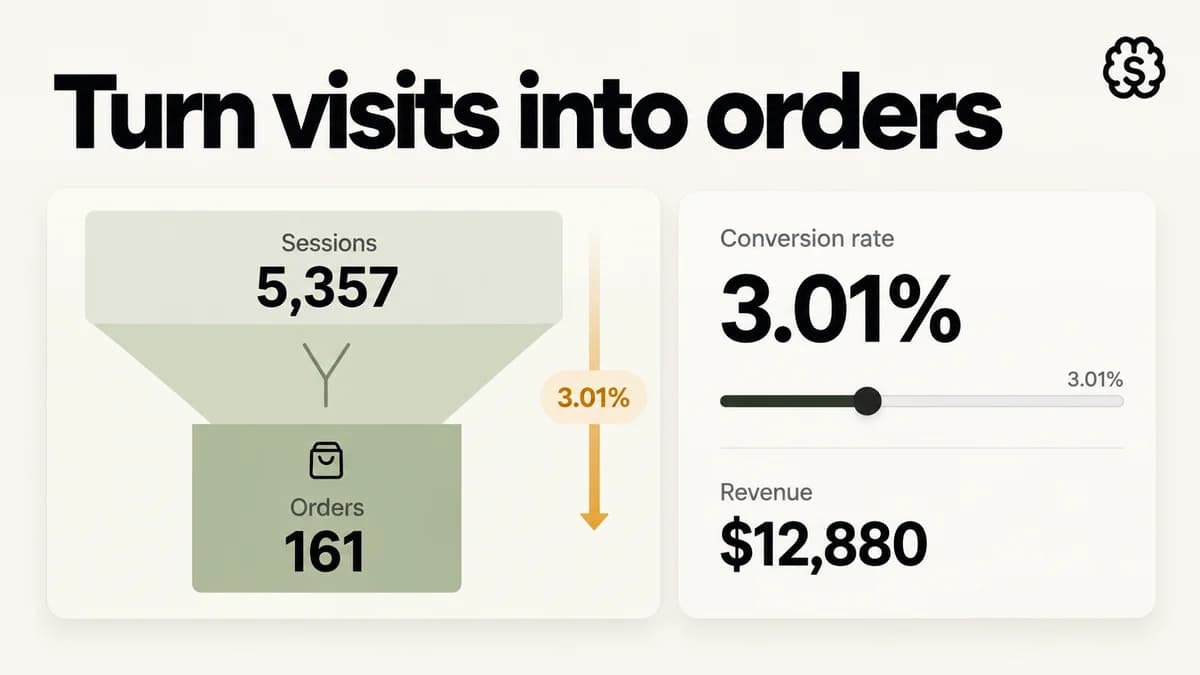
Use the Conversion Rate Calculator alongside AOV, contribution per order, and contribution per eligible visitor. Read fulfillment costs, cancellations, and returns as they mature. AOV and conversion can move in opposite directions, so neither should become the sole success condition by accident.
Keep or revise the offer based on the combined result and the strength of the evidence. A useful next step might be a different threshold, a more relevant bundle, or clearer terms. Preserve what changed and why, so the next campaign builds on observed customer behavior rather than another round of untested assumptions.